Mid-Atlantic Wind – Overcoming the Challenges
(September 27, 2012)
Princeton Energy Resources International (PERI) recently completed a study, supported by the US Department of Energy, Wind Powering America Program, Maryland Department of Natural Resources and Chesapeake Bay Foundation, which analyzed barriers to wind energy development in the Mid-Atlantic region along with options for overcoming or mitigating them. The Mid-Atlantic States including Delaware, Maryland, North Carolina and Virginia, have excellent wind energy potential and growing demand for electricity, but only two utility-scale projects have been installed to date. Reasons for this apathetic development of wind resources were analyzed and quantified for four markets. Specific applications are: 1) Appalachian mountain ridgeline sites, 2) on coastal plains and peninsulas, 3) at shallow water sites in Delaware and Chesapeake Bays, Albemarle and Pamlico Sounds, and 4) at deeper water sites off the Atlantic coast. Each market has distinctly different opportunities and challenges. The primary barriers to wind development described in this report can be grouped into four categories; state policy and regulatory issues, wind resource technical uncertainty, economic viability, and public interest in environmental issues. The report concluded that there are no insurmountable barriers to land-based wind energy projects and they could be economically viable today. Likewise potential sites in sheltered shallow waters in regional bays and sounds have been largely overlooked but could be economically viable today. Offshore ocean-based applications face higher costs, technical risks and wind resource uncertainties. Specific actions are described to overcome barriers in each state. These generally relate to expanding research, development and demonstration programs, revisions to state incentive policies, additional wind measurement efforts, transmission system expansion, environmental baseline studies and outreach to private developers and stakeholders, needed to reduce barriers to wind energy development. For PDF of report click here.
Mid-Atlantic Renewable Energy Education Program for Rural Electric Power Sector
(September20, 2011)
Princeton Energy Resources International (PERI) is teaming with a local university, a community college and two rural electric cooperatives to provide training and workforce development to accelerate the use of sustainable energy resources in the Mid-Atlantic region. Working with Worchester and Wicomico Community College, PERI is developing and implementing an Associate degree program in Electrical Engineering, an Associate of Applied Sciences degree in Environmental Engineering Technology, and a certificate program in alternative energy. A distance learning component will be added to the program to provide further outreach to electric cooperatives. The PERI team is also assisting University of Maryland Eastern Shore in the development of a Rural Energy Business Administration Certificate program that focuses on business issues related to sustainable and renewable energy. To further enrich the learning experience, Maryland Energy Administration is supporting a wind and solar data collection laboratory to provide hands-on field training experience. Choptank Electric Cooperative and Old Dominion Electric Cooperative are implementing mentorships and scholarships. To guide the overall program, an Industry/Academic Advisory Board is being formed.
PERI Supports Maryland Energy Administration in preparation of the Ten-Year Energy Outlook
(March 24, 2010)
Princeton Energy Resources International, LLC (PERI) teamed with other local firms to assist the Maryland Energy Administration (MEA) in developing a Ten-Year Outlook for the state that was published in January 2010. The Maryland Energy Outlook (MEO) report focuses on growing a green economy with a robust workforce, reducing electricity consumption, expanding renewable energy (especially wind, solar and biomass), and promoting energy independence through alternative transportation policies. PERI developed a ten-year energy demand and supply forecast for the years 2009 through 2018, including comparison and analysis of supply and demand issues and options. The work was monitored by an Advisory Committee, appointed by the MEA. In releasing the report Governor Martin O’Malley noted,. “At this critical juncture, we must objectively examine our State energy goals and assess our progress in achieving them, capitalizing on the opportunities these times offer us to create jobs and drive economic progress. This report will help guide energy policy as we continue to fight for affordable, reliable, and clean energy for all Maryland’s citizens.”
PDF of Maryland Energy Outlook Report
Economic Study of BioEnergy Production from Digesters at Dairies in California, CEC Report No. 500-06-013; prepared by Princeton Energy Resources International, under subcontract to SAIC; prepared by Nicholas Cheremisinoff, Kathryn George, Joseph Cohen; December 2008
(December31, 2008)
During 2008, under subcontract to SAIC, for the California Energy Commission, PERI researched and prepared an economic study of Bio-Energy Production from Anaerobic Digesters at Dairy Farms in the state. California is seeking to reduce water pollution and to recover energy if possible. PERI analyzed ten farms that were part of a pilot project to produce electricity from cow manure, using small-scale digesters on the order of 0.5 MW, and considered also the option of producing pipeline-quality gas. PERI’s engineers researched capital cost, operating expense, and energy performance data, to be run through a cash flow model to determine unit cost of electricity or pipeline quality gas, under conventional and enhanced environmental standards. PERI researched tax and financial benefits, including the Section 45 Production Tax Credit for agricultural methane, 50% Bonus Depreciation (where 50% of qualified cost may be deducted in the start-up year), and the option of selling carbon credits on the Chicago Climate Exchange, both for methane reduction and for renewable energy power production. Financial and tax benefits improve project economics in the short run. Farmers, industry, and power purchasers must work to standardize equipment, gain operating experience, and offer reasonable tariffs and contract terms, such that the dairy power plants operate for longer, sustained periods and realize a high plant capacity factor. PERI's final report, for December 2008, concluded that if plant and equipment capital costs are reduced and the plant operates efficiently, then dairy power plant COE can be reduced to a competitive range.
Primer: The DOE Wind Energy Program's Approach to Calculating Cost of Energy: July 9, 2005 - July 8, 2006; NREL Report No. SR-500-37653, January 2008
(December 31, 2008)
In January 2008, the National Renewable Energy Laboratory (NREL) published Primer: The DOE Wind Energy Program's Approach to Calculating Cost of Energy. This report was researched and written by Dr. Thomas C. Schweizer, PERI’s late president, and Kathryn E. George, Senior Economist at PERI. They describe how to calculate a levelized constant-dollar Cost Of Energy (COE), reflecting the revenues (tariff) a wind energy plant must charge to cover its capital cost, operating expenses, and a return to debt and equity investors. This metric is employed by DOE’s Low Wind Speed Technology Project to evaluate R&D progress over time.
Dr. Schweizer and Ms. George describe DOE’s 2002 Reference Turbine and how the same physical plant will give different COE’s depending on the Financing/Ownership structure selected and the values of different financial, economic, and tax parameters. They then present updated assumptions for more recent wind energy plants. They presented results with and without the Section 45 Production Tax Credit (PTC), for ownership/financing by Independent Power Producers (IPP’s) using limited recourse Project Finance and by large established Generating Companies using balance sheet finance. Ms. George finalized the report and included two variations that had gained some vogue, Portfolio Finance and All Equity finance by passive institutional investors, as well as one aggressive approach to reduce COE, where the developer/sponsor “monetizes” the Section 45 PTC and agrees to pay certain outside equity investors, sometimes termed Tax Investors, from this revenue stream. (See http://www.osti.gov/bridge/product.biblio.jsp?osti_id=922149 .)
Funding Sources and Financial Assistance in Maryland for Renewable Energy Development and Conservation
(September 10, 2007)
Under contract to Exeter Associates, Princeton Energy Resources International (PERI) prepared a detailed tracking database and final report describing a variety of financial and other incentive programs that are available to encourage the development and implementation of renewable energy and energy conservation measures and technologies in the State of Maryland. Together, these documents provide detailed information regarding the financial incentives that are currently available from the federal, state and local governments, to Maryland residents, businesses (commercial, agricultural and industrial), electric cooperatives, and local governments. The types of incentives include grants, direct subsidies, rebates, loans and bonds, and tax incentives and exemptions. These financial incentives can often make the difference between an infeasible and an economically viable project, and can substantially influence the profitability of the project.
The incentive database includes specific details about each incentive, such as:
For more information about the Funding Sources and Financial Assistance in Maryland for Renewable Energy Development and Conservation report or database, please contact Mr. Daniel Ancona via email at dancona@perihq.com or via telephone at 301-468-8414.
Mr. Rezaiyan Presented "Assessing the Economic Potential of IGCC With Liquid Sparing at Symposium on Western Fuels
(November 15, 2006)
Mr. John Rezaiyan presented a paper titled"Assessing the Economic Potential of IGCC With Liquid Sparing at Symposium on Western Fuels on October 24, 2006. This paper examines the potential for revenue enhancement for an Integrated Gasification Combined Cycle (IGCC) power plant using a spare gasifier train as an operating unit to assure electrical output and to convert any surplus syngas, after power generation needs have been met, to marketable liquid fuels (“liquid sparing”). The liquid fuels production technology considered is the well-established Fischer-Tropsch (F-T) technology. The F-T technology is used to convert natural gas and syngas to liquid fuels and is available for license from Sasol, Rentech, Exxon, Shell, and others. This option is made more attractive by the potential to run several of the commercially available gasifiers at feed rates above rated levels. The ability to do this without life reduction has been demonstrated on operating units. Other options such as storing syngas to fire co-located peaking generation units might also be attractive should liquid prices drop. The goal is to keep the capital equipment as productive as possible while assuring high system availability for power generation. This paper also considers a number of ownership perspectives, each with different financing structures, financing costs, desired rate of return, and/or taxes obligations. The ownership perspectives considered include independent power producer (IPP), non-recourse financing; corporate owned, balance sheet financing; regulated investor-owned utility (IOU); and municipal-owned utility (MOU).
PDF of Paper | PDF of Presentation
PERI Hosts Jordanian Delegation on Visit to Boston
(October 12, 2006)
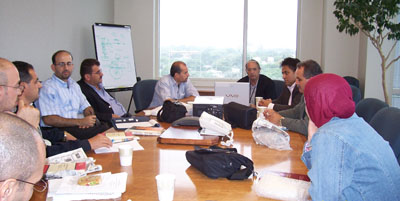 In late August, PERI assisted CDM International in hosting a major delegation of Jordanian industrialists and environmental regulators during
a visit to Boston and the surrounding area. The delegation met with members of USEPA and visited several industrial and municipal wastewater treatment facilities to observe the newest technologies.
Dr. Cheremisinoff led several of the lectures, as shown here, and guided members on parts of the tour.
Dr. Nicholas Cheremisinoff to Conduct Workshop at Environment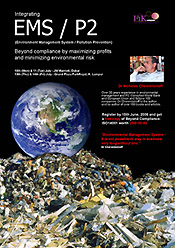
Management System/ Pollution Prevention (EMS/P2) Event
(May 19, 2006)
Dr. Cheremisinoff will be conducting workshops at an FiK International event
on Intergrating EMS/P2: Beyond compliance by maximizing profits and minimizing environmental risk. The event will be held on the 10th (Mon) & 11th (Tue) of July at the JW Marriott, Dubai and on the 13th (Thu) & 14th (Fri) of July
at the Grand Plaza ParkRoyal, K. Lumpur. If you register by the 15th of June, 2006, you will receive a free copy of Beyond Compliance: ISO14001 worth US$100-00. Please see FiK International website for more information. Click here or on picture at right for a brochure on the event (PDF).
PERI Awarded Follow-Up Contract with the U.S. Trade and Development Agency
(April 13, 2006)
Princeton Energy Resources International, LLC (PERI) was recently awarded
its second Conferences, Workshops, Orientation Visits, Training and Other Events contract with the U.S. Trade and Development Agency (USTDA). Under
this contract, PERI will support USTDA activities worldwide in the energy and environment/water sectors by providing (1) Conference and Workshop Support by coordinating and managing both the substantive and logistic activities. (2) Training Support by developing and preparing training and presentation material, identifying high caliber trainers and speakers and coordinating with them, planning, managing, and executing all logistical activities; (3) Outreach Support by conducting background research, providing subject matter experts and expert advice, preparing special reports and presentation material in support of USTDA employees meeting with business people, marketing the event, and providing all logistic support. Since 2002, PERI has been planning, organizing, and implementing orientation visits, technical symposiums and conferences on behalf of USTDA. In addition, PERI has conducted Definitional Missions (DM) to the countries of Central and Eastern Europe to identify and evaluate projects to be recommended for USTDA grants and performed feasibility studies for power and black liquor energy and chemical recovery projects in Venezuela, South Africa and Russia. PERI look's forward to continuing its tradition of providing quality support services to the U.S. Trade and Development Agency. For additional information, please contact José Menéndez at 301-468-8421 or jmenendez@perihq.com.
PERI Prepares Report for the National Commission on Energy Policy
(July 6, 2005)
The U.S. electricity sector is operating today under a number of uncertainties as power providers are forced to make significant long-term investments in the face of potential market structure reform, fundamental changes in fuel prices, and looming environmental regulations. In addition to these largely uncontrollable external forces, technological innovation is presenting a set of new options for investment that have the potential to facilitate a transformation in the industry by allowing it to increase reliance on the nation’s most abundant energy resource – coal – in a manner that significantly improves the sector’s environmental profile and enhances the nation’s energy security objectives. But these nascent technologies come with a set of technological and financial risks that complicate the realization of their potential. This report examines a potential configuration for coal gasification leading to production of electricity (via integrated gasification combined cycle or IGCC) as a primary product, and liquid transportation fuels secondarily, and provides an assessment of the IGCC and coal gas to liquid (CGTL) technologies along with a comprehensive analysis of the economics under various financial structures.
PDF file of report
Gasification Technologies: A Primer for Engineers and Scientists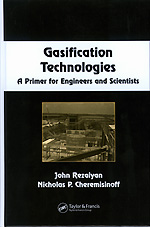
(April 22, 2005)
Written by John Rezaiyan, PERI’s Vice President for Advanced Engineering, and Nicholas Cheremisinoff, Director of Clean Technologies/P2 Projects, Gasification Technologies: A Primer for Engineers and Scientists provides a multidimensional and well rounded look at current technology, research, applications, and development challenges for the commercialization of this technology. In addition to providing a historical perspective and commercialization trends of this increasingly popular technology, it features the following:
The Hashemite Kingdom of Jordan Reuse for Industry, Agriculture and Landscaping (RIAL) Project
Guidance Document for Worker Safety Training Program for the Jordan Oil Refinery Co. — Task 3 Report (PDF)
(April 20, 2005)
The Reuse for Industry, Agriculture and Landscaping (RIAL) Project is a technical assistance program funded by the United States Agency for International Development (USAID) and designed to assist the Gov. of Jordan (GOJ). The primary aim of Task 3 of the RIAL Project (Water Reuse, Conservation and Pollution Control in Industries) is to assist the GOJ in developing a national strategy for the enhancement of industrial water recycling, reuse and conservation that will be both acceptable and “implementable” for industries in Jordan. It also focuses on the application of pollution prevention (P2) through ISO 14001 for improving enterprise competitiveness through improved environmental performance. Dr. Nicholas P. Cheremisinoff, PERI’s Director of Clean Technologies/P2 Projects, leads Task 3 of the RIAL Project.
Recently, Dr. Cheremisinoff prepared a report focusing on worker safety issues for implementing ISO 14001 for the Jordan Oil Refinery Co. The enterprise is developing a formal Environmental Management System which will improve their overall management of water and wastewater. This document serves as a Guidance Document for the worker safety training component that the facility will need to develop in order to implement ISO 14001 more effectively. The education and training of the workforce on safe work practices will help to ensure high productivity, leading to lower operating costs and improved environmental performance; fewer accidents, less insurance claims and lost work time; decreased negative environmental impacts such as spills and unplanned discharges/releases; and a reduction of future liabilities and lower overall risk to the community as a whole.
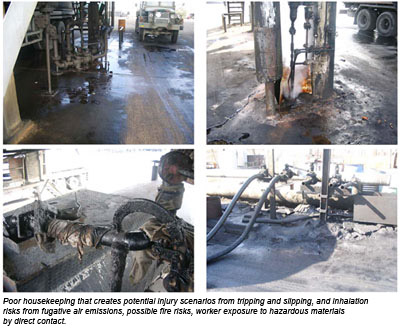
Please click here for more information on PERI's work in Jordan.
Paper and PowerPoint Presentation by Joe Cohen: Assessment of Potential Improvements in Large-Scale Low Wind Speed Technology Presented at Global WINDPOWER 2004, Chicago, Illinois
(March 29, 2004)
At the Global Windpower 2004 Conference, in Chicago Illinois, held in late March 2004, Joseph Cohen of PERI presented a paper, Assessment of Potential Improvements in Large-Scale Low Wind Speed Technology. The paper first sets forth a reference set of capital cost, performance and operating expense characteristics for wind energy plants, using a composite of leading-edge 2002 technology. It then defines a set of Technology Improvement Opportunities (TIO) that may lead to lower cost power, as measured by levelized cost of energy (COE). Various turbine technology configurations, or “pathways,” are tested against possible R&D outcomes and probabilities of achieving success.
MS Word Document | PowerPoint Presentation
To view and print these documents, you'll need to download Adobe Acrobat Reader. Please click the "Get Acrobat Reader" icon below to download and install the correct plug-in for your browser.